Cooking ribs in the oven can turn a simple meal into a mouthwatering feast. The secret lies in knowing the right temperature to achieve tender, flavorful meat that practically falls off the bone. Many home cooks struggle with this, leading to overcooked or undercooked ribs that miss the mark.
Understanding the ideal cooking temperature is crucial for perfecting this classic dish. It not only affects the texture but also enhances the smoky flavors that make ribs so irresistible. With the right guidance, anyone can master the art of oven-cooked ribs and impress friends and family at the dinner table.
Understanding Ribs Cooking Basics
Cooking ribs requires knowledge of their types and the methods used to prepare them for the best results.
Types of Ribs
Different types of ribs include baby back ribs, spare ribs, and St. Louis-style ribs.
- Baby Back Ribs: These ribs come from the top of the rib cage, near the spine. They’re shorter, leaner, and tend to cook faster.
- Spare Ribs: Cut from the lower section of the pig’s rib cage, spare ribs are larger and meatier, requiring longer cooking times.
- St. Louis-Style Ribs: These spare ribs have been trimmed down to a rectangular shape, offering more uniform cooking and presentation.
Cooking Methods
Various cooking methods produce different flavors and textures in ribs.
- Oven-Baking: Utilize low temperatures, typically around 225°F to 300°F, to allow the meat to tenderize over a longer period.
- Grilling: Cook at medium heat for a smoky flavor, usually between 325°F to 350°F, finishing with high heat to caramelize sauces.
- Smoking: Apply smoke at temperatures between 225°F to 250°F for several hours, allowing the flavors to fully penetrate the meat.
Choosing the right type of ribs and cooking method directly influences the final outcome, ensuring ribs are tender and flavorful.
Ideal Temperature Range for Cooking Ribs in Oven
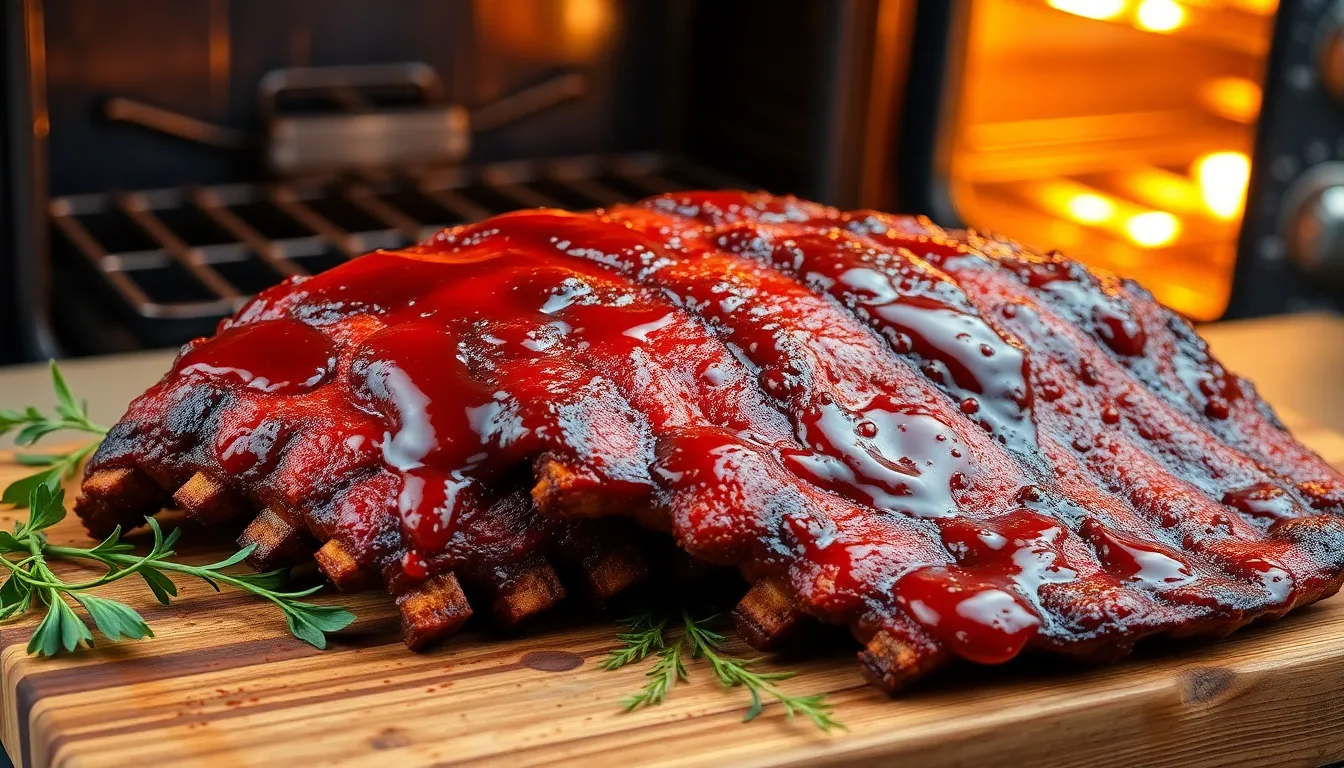
Cooking ribs at the right temperature produces tender, flavorful results. Two primary cooking methods—low and slow, as well as high-temperature cooking—offer distinct advantages.
Low and Slow Cooking
Low and slow cooking typically occurs at temperatures between 225°F (107°C) and 275°F (135°C). This method allows collagen in the meat to break down gradually, resulting in tender ribs. Cook ribs at 250°F (121°C) for the best balance of time and tenderness, which takes approximately 3 to 4 hours. Wrapping ribs in foil can retain moisture and enhance flavor during cooking.
High-Temperature Cooking
High-temperature cooking ranges from 300°F (149°C) to 350°F (177°C). This method cooks ribs faster, usually within 2 to 3 hours, yielding a crispy exterior while maintaining juiciness inside. Techniques such as searing or broiling in the final stages help achieve a caramelized finish. Monitoring internal temperature is crucial to avoid drying out the meat. The target internal temperature for fully cooked ribs is 190°F (88°C) to 203°F (95°C) for tenderness.
Tips for Perfectly Cooked Ribs
Achieving perfectly cooked ribs requires attention to detail in seasoning, marinating, and wrapping techniques.
Seasoning and Marinades
Seasoning enhances the flavor of ribs. Explore dry rubs combining salt, pepper, garlic powder, and paprika for a balanced taste. Apply the rub generously, allowing it to penetrate the meat. Marinating ribs adds layers of flavor; use acidic ingredients like apple cider vinegar or citrus juice to help tenderize the meat. Allow ribs to marinate for at least two hours, but overnight yields even better results. Brushing on sauce halfway through cooking can add a caramelized finish without burning.
Foil Wrapping Techniques
Foil wrapping retains moisture and can speed up cooking. Wrap ribs tightly in aluminum foil for the first half of the cooking process, creating a steam effect that tenderizes the meat. Opt for a mix of apple juice, broth, or beer inside the foil for added flavor and moisture. After the initial cooking time, unwrap the ribs and return them to the oven uncovered for the final phase. This allows the exterior to crisp and develop a desirable bark.
Common Mistakes to Avoid
Cooking ribs in the oven requires attention to detail. Avoiding common mistakes can greatly enhance the outcome of the dish.
Undercooking and Overcooking
Undercooking or overcooking ribs leads to undesirable textures. Undercooked ribs remain tough and chewy, while overcooked ribs become dry and lose flavor. Aim for an internal temperature of 195°F to 203°F for optimal tenderness. Use a meat thermometer to check the temperature halfway through the cooking process and adjust cooking time accordingly. Different types of ribs may require different cooking times, so familiarity with each type helps prevent these mistakes.
Skipping Resting Time
Skipping the resting time after cooking ribs can result in lost juices. Letting ribs rest for at least 10 to 15 minutes allows the juices to redistribute throughout the meat. This step enhances tenderness and flavor when cutting into the ribs. Cover the ribs loosely with foil during this resting period to help retain heat without steaming the meat.
Cooking ribs in the oven can transform a simple meal into a mouthwatering experience. By understanding the ideal temperature and employing the right techniques, anyone can achieve tender and flavorful results. Whether opting for low and slow or a higher temperature method, the key lies in monitoring the internal temperature and allowing the ribs to rest before serving.
With a bit of practice and attention to detail, home cooks can master the art of oven-cooked ribs. By following the tips outlined in this article, they’ll be well on their way to impressing family and friends with perfectly cooked ribs that are sure to be a hit at any gathering.