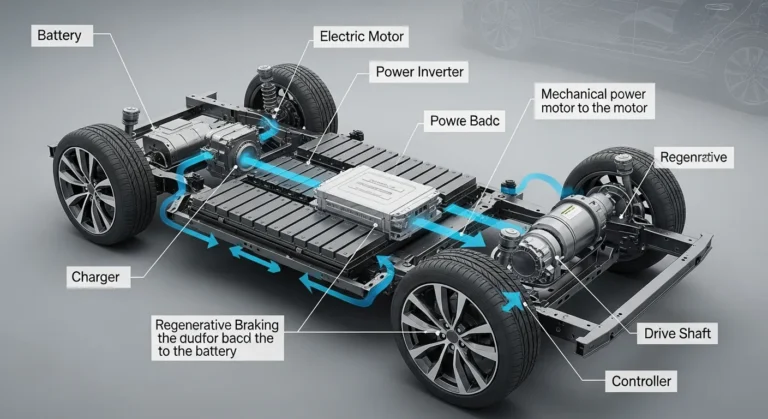
When it comes to the electric vehicle (EV) revolution, many of us may feel a little lost in the jargon. So, let’s cut through the confusion: do electric vehicles even have transmissions? You might picture a classic car grumbling in low gear as it chugs uphill while trying to not have its clutch explode, but EVs are a different beast altogether. They boast sleek designs, instant torque, and a quieter ride, so where does the transmission fit into this equation? Join us as we navigate the electrifying world of EVs and transmission technology. Spoiler alert: it’s not as straightforward as you may think.
Table of Contents
ToggleUnderstanding Transmissions in Traditional Vehicles
To appreciate the difference in electric vehicles, we need to get familiar with how traditional vehicles work.
The Role of Transmissions in Gasoline Engines
In traditional gasoline engines, transmissions play a crucial role. Essentially, they’re responsible for managing the power generated by the engine and transforming it into motion. Without them, we’d be stuck in first gear, perpetually trying to accelerate but going nowhere fast.
Transmissions allow us to change gears, optimizing power output for various speeds. In standard vehicles, you’ll generally see a manual or automatic transmission. Manuals require gear shifting by the driver, while automatics manage that shifting for you. Each gear corresponds to a range of speeds and power needs, ensuring smooth acceleration and engine efficiency. So, in this context, transmissions are vital for enhancing performance and fuel economy.
Characteristics of Electric Motors
What sets electric motors apart from their gasoline counterparts? In short, they offer instant torque, providing that delightful quick acceleration that many of us love. But here’s the kicker: electric motors operate quite differently from internal combustion engines.
Do Electric Vehicles Use Transmissions?
Now, the question we’ve all been waiting for, do electric vehicles actually use transmissions? Well, most electric vehicles don’t. They commonly feature a single-speed transmission that allows the electric motor to deliver power directly to the wheels without the need for gear changes. With this single-speed setup, we enjoy smoother acceleration and an overall simpler driving experience.
But it’s worth noting that some manufacturers are experimenting with multi-speed transmissions in electric vehicles. Why? To improve performance at higher speeds and increase energy efficiency. It’s not just about throwing out the clunky gearbox but discovering innovative ways to enhance our driving experience.
Types of Transmissions in Electric Vehicles
When we look deeper into electric vehicle transmissions, we find a distinct evolution of technology in play.
Single-Speed Transmissions vs. Multi-Speed Transmissions
As we mentioned earlier, the single-speed transmission is the standard for most electric vehicles. Think of it as a simplified system that makes driving easier and more efficient. This type of transmission eliminates some of the complexities that come with traditional vehicles, bringing us a thrilling driving experience with minimal fuss.
On the flip side, we have multi-speed transmissions. These types allow for gear shifting, enhancing performance, especially in high-demand scenarios. While not as common, some high-performance electric vehicles integrate them to provide that extra oomph when we really want to soar down the highway.
Advantages of Using a Transmission in Electric Vehicles
We know that most electric vehicles tend to skip the more complicated transmission systems, but what are the advantages of having one?
Performance and Efficiency Considerations
Using a transmission can potentially enhance an electric vehicle’s performance by allowing better acceleration profiles and optimizing energy usage across varying speeds. For high-speed performance, multi-speed transmissions offer benefits that can improve overall driving dynamics while also boosting efficiency. And who doesn’t want to squeeze every last mile out of a battery charge?
In essence, while single-speed systems work incredibly well for everyday use, multi-speed setups can cater to the driving enthusiast, providing an engaging experience that rivals gas-powered vehicles.
Future Trends in Electric Vehicle Transmissions
As technology continues to march forward, we see exciting developments in electric vehicle transmissions. The future promises even smarter systems that can adapt based on driving conditions, optimizing performance and efficiency like never before. Imagine vehicles adjusting their transmission settings in real-time to cater to battery optimization or driving modes.
Also, the racing world is already adopting multi-speed setups for electric vehicles, so it wouldn’t be surprising to see more manufacturers follow suit in the consumer market. As we innovate and explore new technologies, it’s safe to say that the conversation around electric vehicle transmissions will remain dynamic.